ResidentialUrgent repairs
Same-Night Emergency Plumbing
Of all plumbing trouble, loose water is the kind that grows with every passing minute. Here is how to slow it down and what happens once you phone us.
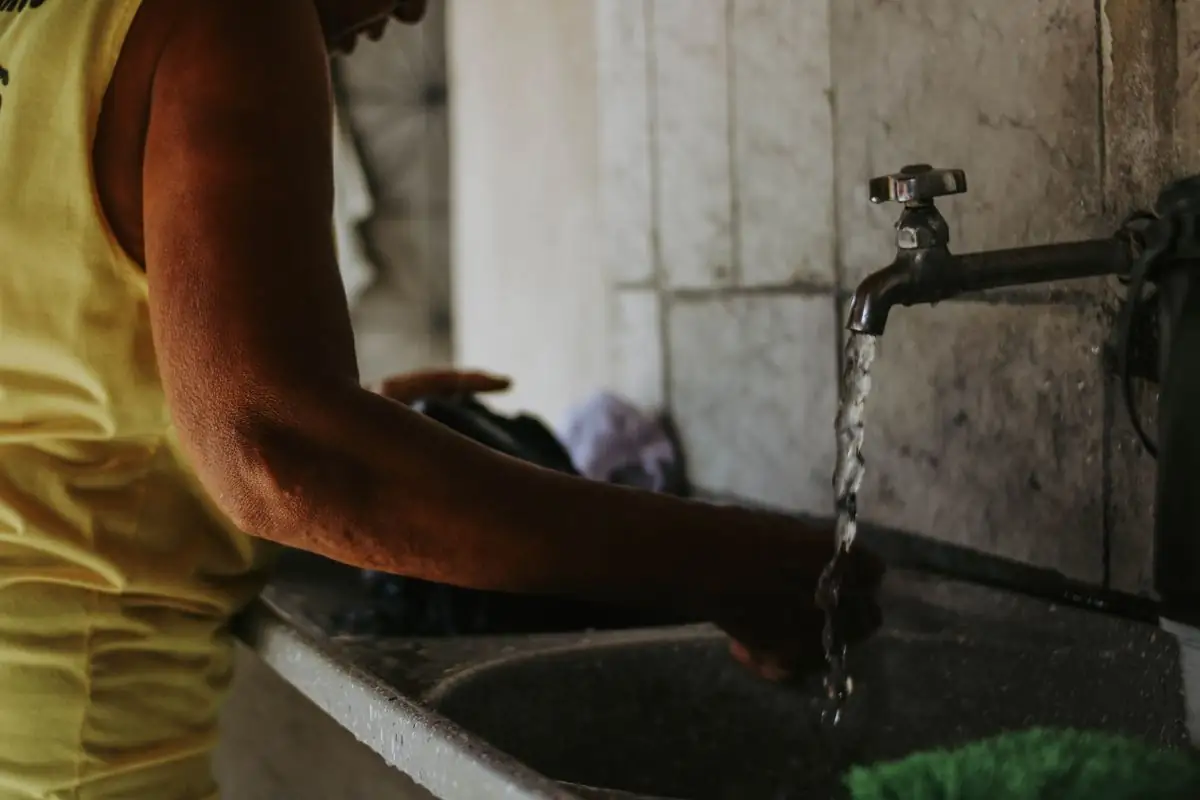
Close-up of a person washing hands under a tap in a rustic indoor setting.
- A plumber answers the phone, not a call centre
- The fix explained before the first wrench turns
- Floors protected and the work area cleaned
- Houses, plazas and kitchens from Cornell to Milliken
- Licensing details confirmed when you call
- Residential
- Commercial
- Markham & York Region
How the job runs
- Any pipe, joint or tank that is spraying or gushing.
- A toilet or floor drain overflowing with waste water.
- Sewage rising in a basement shower or laundry tub.
- No water at all in a house that had it this morning, especially in a cold snap.
- A smell of gas near a water heater (leave the house first, then call Enbridge from outside).
What's included on this job
What we open
The main shut-off first, then whatever wall, ceiling panel or cleanout cap hides the failure.
What we bring
Curb-stop key, quarter-turn valve kit, wet vac, moisture meter, push-fit couplings for a temporary stop.
What we replace
The split section of copper or PEX, a failed supply hose, a cracked fitting or a seized valve.
How we prove it
Water back on slowly, every joint watched dry for ten minutes, meter dial checked for creep.
Signs you need this
- Water spraying or dripping through a ceiling
- The main valve will not close by hand
- Sewage rising in a floor drain or tub
- No way to stop a toilet or tank from overflowing
When it counts as an emergency
Not every drip needs a plumber at eleven at night. These do:
Your first five minutes
- Turn off the main valve. Look where the supply pipe pokes through the basement wall facing the road; it is usually close to the meter.
- Switch off the breaker for any electric water heater or appliance standing in water, but only if you can reach the panel on dry ground.
- Open a lower faucet to drain what is left in the lines.
- Move rugs, boxes and electronics up and out of the way. Take photos for your insurer.
Why it happens in Markham houses
Many emergencies we see trace back to a few local patterns. Older homes in Thornhill and Markham Village still have copper or galvanized lines running along exterior walls where January cold reaches them. Newer subdivisions in Cornell and Box Grove sit on clay soil that holds storm water close to the foundation, so a failed sump pump floods fast. And busy family homes put real strain on supply hoses that were never meant to last fifteen years.
How we handle the job
When you call, a plumber asks what you can see and talks you through stopping the water if it is still running. We then give you an honest arrival window. On site, the first job is to make things safe and dry enough to work. The second is a proper repair rather than a clamp that fails next week. If a lasting fix needs parts we do not carry, we stabilise the leak and come back.
From the van: Keep a flashlight near the main shut-off. Most night calls start with someone hunting for it in the dark.
The first job on any emergency is the valve, not the leak. Stop the water, then open the wall.
What changes the cost
Time of day, how hard the leak is to reach, the pipe material and whether drywall must be opened all affect the bill. We explain the likely range on the phone and confirm it before we start, so there are no surprises when the water is off.
Call before it gets worse
Water travels along joists and under flooring further than people expect. The sooner the source is stopped, the less you have to dry out, replace or argue about with an adjuster.