ResidentialKitchen drains
Clearing Stubborn Kitchen Sink Clogs
The kitchen sink takes more abuse than any other drain in the house. When it finally stops, the cause is usually months of fat, starch and fine scraps building up together.
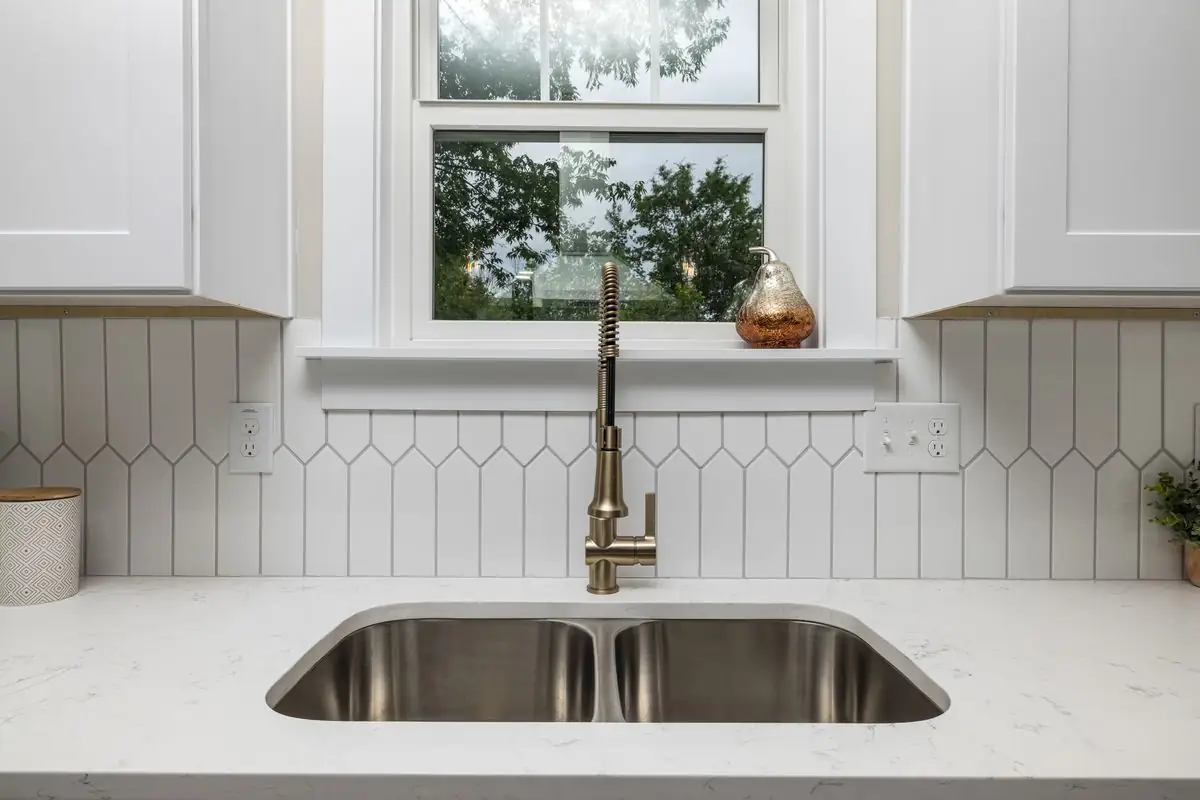
Contemporary kitchen design featuring white cabinets and a stainless steel sink with a minimalist faucet.
- Traps and cleanouts opened instead of forcing a cable through the fixture
- Cable heads and jetter nozzles matched to the pipe size
- Line run under load and proven clear before we pack up
- Camera look offered when the same line keeps blocking
- Licensing details confirmed when you call
- Residential
- Commercial
- Markham & York Region
How the job runs
- One side of a double sink backs up when you drain the other.
- The dishwasher leaves dirty water standing in the sink.
- A smell like old dishcloths hangs around even after cleaning.
- Plunging works for a day, then the problem returns.
What's included on this job
What we open
The double-sink trap and the wall arm behind it, or the cleanout tee in the basement below the kitchen.
What we bring
A 25-foot drum auger with a bulb head, a trap wrench, and a scraper for hardened grease in the arm.
What we replace
The continuous waste tee, slip nuts and washers, and the trap itself if the plastic has cracked.
How we prove it
We fill both basins and pull the plugs together, which is the load that shows a half-cleared line.
Signs you need this
- Grey water rising in one basin while the other drains
- Grease ring around the sink after washing up
- Dishwasher leaving water in its tub
- A sucking noise from the drain
Why it happens in Markham kitchens
Most kitchens in town drain through a 1.5-inch line that runs sideways inside a wall before turning down to the main stack. That horizontal run is where things settle. Fat from frying and rice water cool, cling and catch everything that follows. In homes where the kitchen sits over a garage or on an outside wall, the pipe runs colder in winter and the build-up hardens faster. Disposals help less than people hope; they grind food small, but it still has to travel.
How we clear it
- We protect the cabinet floor and remove the trap to check whether the clog is right there.
- If not, we feed a small cable into the wall pipe through the trap arm, not the sink basket.
- We check the dishwasher drain loop and the disposal outlet, both common catch points.
- We flush with hot water and watch the trap for leaks before closing up.
Small changes that help
| Instead of | Try |
|---|---|
| Pouring pan fat down the sink | Letting it cool in a can and putting it in the green bin |
| Rinsing rice and pasta water straight down | Using a fine strainer in the drain |
| Running the disposal for a few seconds | Running cold water for half a minute after it stops |
Pan grease poured hot cools in the wall arm and stacks up like candle wax, layer on layer.
What changes the cost
A clog right at the trap is a short visit. One deep in the wall, or a sink line that joins a shared stack with old cast iron, takes longer. Cabinets crowded with water filters and pull-out bins also slow access. We explain what we find before deciding how far to go.
Call before it gets worse
Standing water in a kitchen sink can seep into the cabinet base and swell particleboard within days. If plunging has failed twice, it is time for a cable.