ResidentialPipes
Whole-House Repiping for Older Houses
Some houses reach a point where patching one leak after another stops making sense. A planned repipe replaces tired supply lines with new ones and ends the cycle.
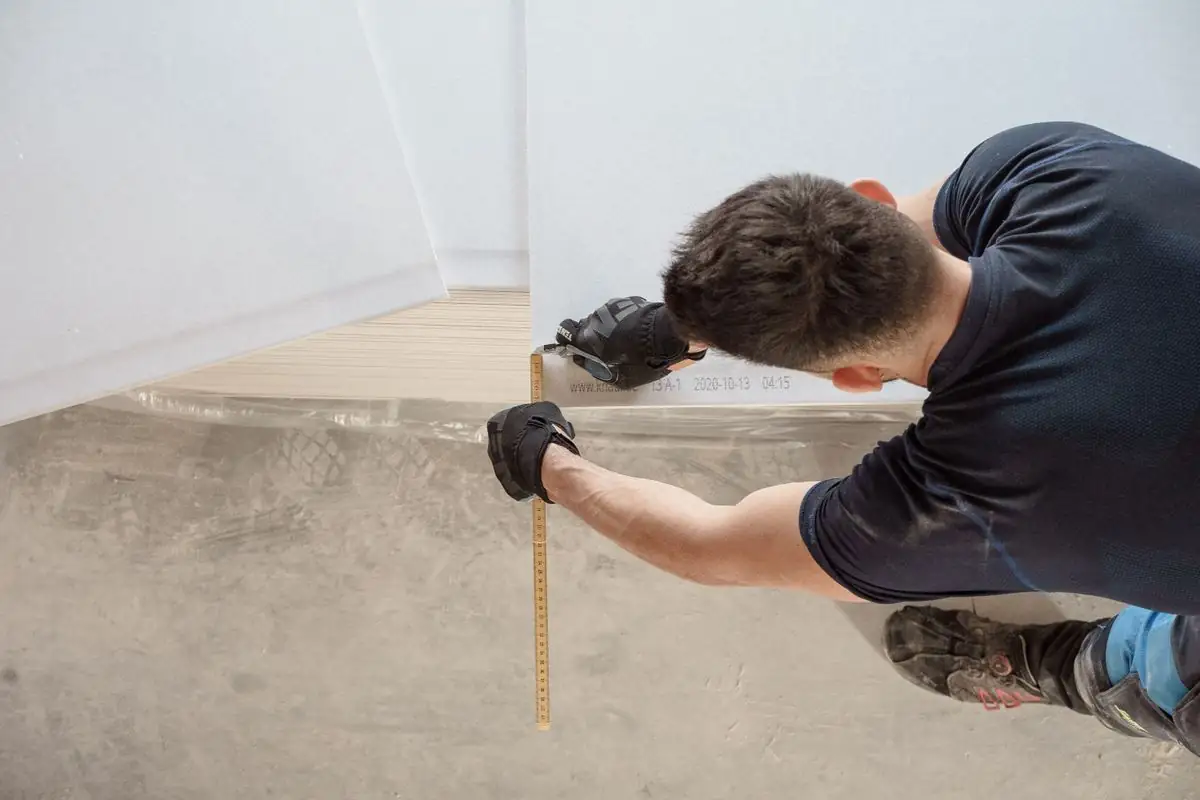
Construction worker measuring and cutting flooring panels in a renovation project.
- Leak traced with meter checks and moisture readings
- Walls and ceilings opened only where the pipe is
- Copper, PEX or ABS joined to match what is there
- Pressure-tested and left visible until it is proven dry
- Licensing details confirmed when you call
- Residential
- Commercial
- Markham & York Region
How the job runs
- Several pinhole leaks in copper over a couple of years.
- Galvanized steel lines that give rusty or low-pressure water.
- Polybutylene grey plastic lines from the late 1970s to the 1990s.
- A gut renovation that already has walls and ceilings open.
What's included on this job
What we open
Access holes at each fixture and along the joist runs, planned so we can patch neat squares afterward.
What we bring
PEX expansion or crimp tools, copper press tools, a manifold, and pipe hangers.
What we replace
Every galvanized or pinholed copper branch cut out and swapped for PEX home runs off a manifold.
How we prove it
The new system pressure-tested before walls close, then every fixture run for flow and leaks.
Signs you need this
- Brown water first thing in the morning
- Pressure dropping when two taps run
- Pinhole leaks in copper more than once
- Galvanized pipe still feeding the house
What we see in Markham
The heritage homes of Unionville and Markham Village sometimes still carry galvanized lines, at least in part. Many 1970s and 1980s houses in Thornhill, Milliken and Armadale have original copper that has thinned over time. Each type fails in its own way: galvanized clogs from the inside, copper develops pinholes, and older plastics can crack at the fittings. A repipe deals with all of it at once.
How a repipe runs
- We walk the house, trace the existing lines and note the fixtures.
- We plan new routes that keep cuts to walls and ceilings to a minimum.
- We usually use PEX, which flexes through framing and resists freezing better than rigid pipe.
- We work room by room, keeping water on overnight wherever we can.
- We add shut-off valves at each fixture and a manifold if it suits the layout.
- We pressure-test the system before any wall is closed.
Materials at a glance
| Material | Notes |
|---|---|
| PEX | Flexible, fewer fittings, quicker to run through finished homes |
| Copper | Long proven, rigid, more cutting and soldering |
What changes the cost
House size, number of bathrooms, how finished the basement is and how much drywall must come off all matter. Patching and painting can be done by your own contractor or arranged separately. A permit from the City of Markham is often required for this scale of work.
From the van: Plan a repipe in the warmer months if you can. Working with open walls is easier when the house is not fighting the cold.
Old galvanized pipe closes from the inside. The outside looks fine right to the end.
Call before it gets worse
Each patch on a failing system buys a little time. A plan lets you choose the timing rather than react to the next leak.